Universal Design of Instruction (UDI): Definition, Principles, Guidelines, and Examples

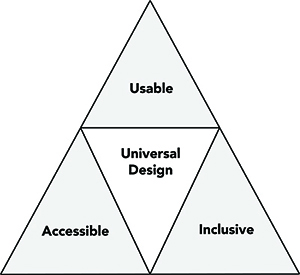
Precollege and college students come from a variety of ethnic and racial backgrounds. For some, English is not their first language. Also represented in most classes are students with a diversity of ages and learning preferences, including visual and auditory. In addition, increasing numbers of students with disabilities are included in regular precollege and postsecondary courses. Their disabilities include those that are related to sight, hearing, mobility, learning, social interactions, and health. Students are in school to learn and instructors share this goal. How can educators design instruction to maximize the learning of all students? Universal design of instruction(UDI) can provide a framework for inclusive teaching and learning materials and pedagogy. You can apply this body of knowledge to create courses that ensure lectures, discussions, visual aids, videos, printed materials, labs, and fieldwork are accessible to, usable by, and inclusive of all students.
Universal Design
Designing any product or environment involves the consideration of many factors, including aesthetics, engineering options, environmental issues, industry standards, safety concerns, and cost. Often, products and environments are designed for the average user. In contrast, UD is defined by Romane and Center for Universal Design (CUD) at North Carolina State University as “the design of products and environments to be usable by all people, to the greatest extent possible, without the need for adaptation or specialized design”. When designers apply UD principles, their products and environments meet the needs of potential users with diverse characteristics that include disabilities.
Making a product or environment accessible to people with disabilities often benefits others. For example, sidewalk curb cuts, designed to make sidewalks and streets accessible to those using wheelchairs, are today often used by kids on skateboards, parents with baby strollers, and delivery staff with rolling carts. When television displays in noisy areas of airports and restaurants are captioned, they are more accessible to people who are deaf and everyone else.
UDI Definition, Principles and Guidelines
A definition that can be used for the applications to teaching and learning (i.e. UDI), modified from the basic definition of UD, is the design of teaching and learning products and environments to be usable by all people, to the greatest extent possible, without the need for adaptation or specialized design.
At Center for Universal Design (CUD), at North Carolina State University, a group of architects, product designers, engineers, and environmental design researchers established seven principles of UD to provide guidance in the design of all products and environments. CUD’s principles of UD are listed below. They are followed by an example and application to instruction.
-
Equitable use. The design is useful and marketable to people with diverse abilities. Example: A professor’s website is designed so that it is accessible to everyone, including students who are blind and using text-to-speech software.
-
Flexibility in use. The design accommodates a wide range of individual preferences and abilities. Example: A museum that allows visitors to choose to read or listen to a description of the contents of display cases.
- Simple and intuitive use. Use of the design is easy to understand, regardless of the user’s experience, knowledge, language skills, or current concentration level. Example: Control buttons on science equipment are labeled with text and symbols that are easy to understand.
-
Perceptible information. The design communicates necessary information effectively to the user, regardless of ambient conditions or the user’s sensory abilities. Example: A video presentation projected in a course includes captions and audio description.
-
Tolerance for error. The design minimizes hazards and the adverse consequences of accidental or unintended actions. Example: Educational software provides guidance and background information when the student makes an inappropriate response.
-
Low physical effort. The design can be used efficiently, comfortably, and with a minimum of fatigue. Example: Doors to a lecture hall open automatically for everyone.
-
Size and space for approach and use. Appropriate size and space is provided for approach, reach, manipulation, and use regardless of the user’s body size, posture, or mobility. Example: A flexible science lab work area has adequate workspace for students who are left- or right-handed and for those who need to work from a standing or seated position.
A related, but more specific application, Universal Design for Learning (UDL), provides specific guidance for designing curricula that enables all individuals to gain knowledge, skills, and enthusiasm for learning. UDL provides rich supports for learning and reduces barriers to the curriculum while maintaining high achievement standards for all. UDL guidelines, developed by Center for Applied Special Techonology (CAST), promote the development of curriculum that includes:
- multiple means of representation,
- multiple means of action and expression, and
- multiple means of engagement.
The Web Content Accessibility Guidelines (WCAG)4 can be used to ensure that IT used for instructional practice is accessible and usable for students with disabilities. They are supported by a foundation of four principles, resulting in IT that is
- perceivable,
- operable,
- understandable, and
- robust.
UDI embraces UD, UDL, WCAG principles and applies them to all aspects of instruction, including physical spaces, curriculum, pedagogy, and IT. UDI ensures that students have multiple ways to learn, engage and demonstrate what they have learned. UDI also ensures that each UDI practice is accessible, usable, and inclusive.
UDI Examples
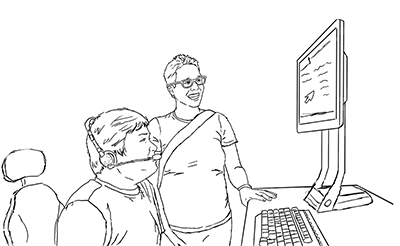
To apply UDI, instructors should consider the potential variation in individual skills, learning styles and preferences, age, gender, sexual orientation, culture, abilities, and disabilities as they select appropriate content and strategies for the delivery of instruction and then apply universal design to all course activities and resources.
The UD, UDL, and WCAG principles that underpin UDI can be applied to the overall design of instruction as well as to specific instructional materials, facilities, and strategies (such as lectures, classroom discussions, group work, web-based instruction, labs, field work, and demonstrations). Listed below are examples of UDI. They are organized under eight performance indicator categories, with a general
guideline for each. Numbers in brackets at the end of each examples refer to UD, UDL, and WCAG principles most relevant to the example.
- Class climate. Adopt practices that reflect high values with respect to diversity, equity, and inclusion. Example: Put a statement on your syllabus inviting students to meet with you to discuss disability-related accommodations and other special learning needs. [UD 1, UDL 2]
- Interaction. Encourage regular and effective interactions between students, employ multiple communication methods, and ensure that communication methods are accessible to all participants. Example: Assign group work for which learners must engage using a variety of skills and roles. [UD 1, 2, 4; UDL 3; WCAG]
- Physical environments and products. For outside instruction, ensure that facilities, activities, materials, and equipment are physically accessible to and usable by all students and that diverse potential student characteristics are addressed in safety considerations. Example: Develop safety procedures for all students, including those who are blind, deaf, or wheelchair users. [UD 3, 4, 6, 7]
- Delivery methods. Use multiple instructional methods that are accessible to all learners. Example: Use multiple modes to deliver content; when possible allow students to choose from multiple options for learning; and motivate and engage students—consider lectures, collaborative learning options, hands-on activities, Internet-based communications, educational software, field work, and so forth. [UD 2–4; UDL 1–3; WCAG]
- Information resources and technology. Ensure that course materials, notes, and other information resources are engaging, flexible, and accessible for all students. Example: Choose printed materials and prepare a syllabus early to allow students the option of beginning to read materials and work on assignments before the course begins. Allow adequate time to arrange for alternate formats, such as books in audio format. [UDL 1; WCAG]
- Feedback and assessment. Regularly assess students’ progress, provide specific feedback on a regular basis using multiple accessible methods and tools, and adjust instruction accordingly. Example: Allow students to turn in parts of large projects for feedback before the final project is due. [UD 5; UDL 2, 3]
- Accommodations. Plan for accommodations for students whose needs are not fully met by the instructional content and practices. Example: Know campus protocols for getting materials in alternate formats, rescheduling classroom locations, and arranging for other accommodations for students with disabilities. [UD 1, 2, 4, 6]
The last classification of UDI practices is important because employing UDI principles does not eliminate the need for specific accommodations for students with disabilities. For example, you may need to provide a sign language interpreter for a student who is deaf. However, applying UDI concepts in course planning ensures full access to the content for most students and minimizes the need for special accommodations. For example, designing web resources in accessible formats as they are developed means that no redevelopment is
necessary if a blind student enrolls in the class.
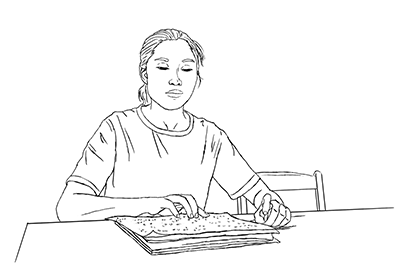
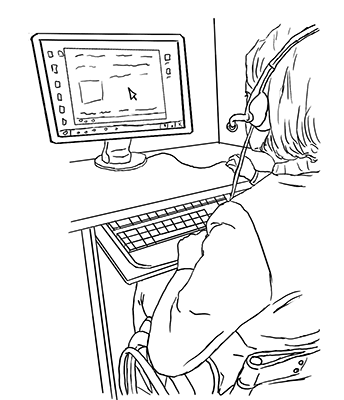
UDI benefits students with disabilities but also benefits others. For example, captioning course videos, which provides access to deaf or hard of hearing students, is also a benefit to students for whom English is a second language, to some students with learning disabilities, and to those watching the tape in a noisy environment. Delivering content in redundant ways can improve instruction for students with a variety of learning styles and cultural backgrounds. Letting all students have access to your class notes and assignments on a website benefits students with disabilities and everyone else. Planning ahead saves time in the long run.
Resources
Consult the following resources for further information on UDI.
- Equal access: Universal design of instruction.
- Burgstahler, S. (Ed.). (2015). Universal Design in Higher Education: From Principles to Practice. Second edition. Boston: Harvard Education Press.
- Center for Applied Special Technology (CAST)
- The Center for Universal Design
- The Center for Universal Design in Education
- UDL on Campus
About DO-IT
DO-IT (Disabilities, Opportunities, Internetworking, and Technology) serves to increase the successful participation of individuals with disabilities in challenging academic programs and careers, such as those in science, engineering, mathematics, and technology. Primary funding for DO-IT is provided by the National Science Foundation, the State of Washington, and the U.S. Department of Education.
For further information, to be placed on the DO-IT mailing list, request materials in an alternate format, or to make comments or suggestions about DO-IT publications or web pages, contact:
DO-IT
University of Washington
Box 354842
Seattle, WA 98195-4842
doit@uw.edu
www.uw.edu/doit
206-685-DOIT (3648) (voice/TTY)
888-972-DOIT (3648) (toll free voice/TTY)
206-221-4171 (fax)
509-328-9331 (voice/TTY) Spokane
Founder and Director: Sheryl Burgstahler, Ph.D.
Acknowledgment
The Center for Universal Design in Education as well as this publication were developed under grants from the U.S. Department of Education, #P333A020042, #P333A020044, and #P333A050064. However, the contents do not necessarily represent the policy of the U.S. Department of Education, and you should not assume endorsement by the federal government.
Copyright © 2020, 2015, 2012, 2010, 2008, 2005, 2001, Sheryl Burgstahler. Permission is granted to copy these materials for educational, noncommercial purposes provided the source is acknowledged.