The University of Washington: Facilities Services

Universal U-PASS FAQ page 10

Universal Student U-PASS

Click on the questions to reveal the answers

What is universal student U-PASS?

Universal student U-PASS refers to a comprehensive transportation benefit program that all eligible UW Seattle students pay for and benefit from starting Fall 2011. All students who pay the Services and Activities (S&A) fee will be U-PASS members and will be required to pay the U-PASS fee.

Why does the U-PASS program exist?

The U-PASS program was created to reduce the congestion coming to and from the UW Seattle Campus and provide the UW community with an affordable, sustainable suite of transportation options. Additionally, the State of Washington and City of Seattle require the UW, as a major employer affected by the Commute Trip Reduction (CTR) Law, to have a program in-place to reduce its impact on the community and the environment.

Over the 20 years U-PASS has been in existence, the vehicle traffic volumes on and around campus have decreased despite an approximately 30% increase in the campus population. U-PASS has successfully created a “cultural island” in which driving alone is the exception, not the norm. U-PASS provides not only benefits to individual U-PASS members; it benefits the UW Community and student body as a whole by reducing congestion, noise, and emissions while creating a safer environment for motorists, pedestrians, and cyclists.

What benefits are included in the universal student U-PASS program?

The universal student U-PASS fee provides eligible students with all the benefits of the student U-PASS program, including

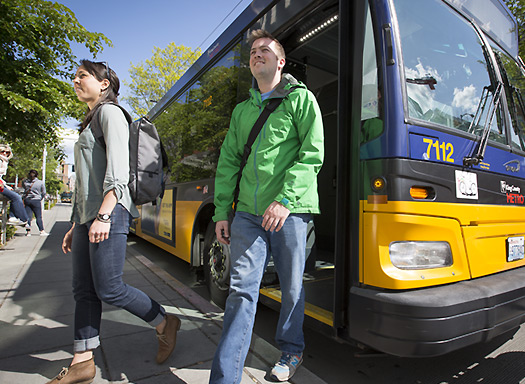
  • Full fare coverage on Metro Transit, Community Transit, Pierce Transit, Kitsap Transit, Everett Transit, and Sound Transit buses
  • Full fare coverage on Sounder commuter train service
  • Full fare coverage on Link light rail
  • Full fare coverage on paratransit services provided by King County Metro ACCESS, Community Transit DART Paratransit, Kitsap Transit ACCESS, Pierce Transit Shuttle, and Everett ParaTransit
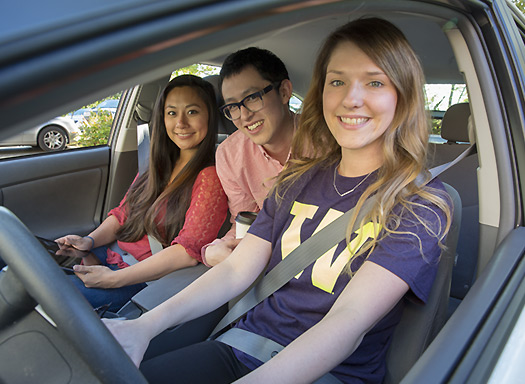
  • Discounted occasional (impromptu) carpooling
  • Free rides on the NightRide Shuttle
  • Vanpool fare credit
  • Discount on Zipcar car-sharing program membership
  • Discounts and special offers at more than 40 businesses

Does the U-PASS cover ferry service?

No, however, many who commute to UW from beyond the King/Snohomish county area benefit from the U-PASS program by participating in the vanpool program. With a U-PASS, you receive up to $70.00 per month toward your vanpool fare.

How did the universal student U-PASS come about?

U-PASS became a universal program for students in response to a two-year student-led process. Student leaders conducted an on-line survey that found the majority of students favored making U-PASS a universal fee. You can read their findings here.

In the fall of 2010, ASUW and GPSS senates voted in support of making U-PASS a universal student program and sought support from the UW Board of Regents to begin collecting the fee. The Regents authorized the change in May of 2011. The change introduces a significantly greater role for students with the formation of a Universal Student U-PASS Advisory Board. All proposed changes to fees and all significant program changes will be presented to the Advisory Board, and the Board, together with the boards and senates of ASUW and GPSS, will have the authority to accept or reject proposed changes. An announcement on Commuter Services home page links to more background on the process.

How do I know whether I am in the universal U-PASS population or not?

Students who pay the Services & Activities Fee (SAF) will be U-PASS members and will be required to pay the U-PASS fee.

Why did students want to make U-PASS a universal student program?

Due to the economic crisis of the late 2000s, rising transit contract costs (a primary driver of establishing the program cost) and the inability for program subsidies to grow proportionately set the stage for the U-PASS program entering a “doom loop“—rising costs were decreasing participation which increased per capita costs for those remaining in the program, which further decreased participation, and so on. Had this change not been made, the cost for U-pass membership was projected to increase to $135 per quarter in Fall 2011 and continue to rise from there. With the adoption of U-PASS as universal student program the most recent rate of $99 per quarter was lowered to $76 per quarter and locked for two years.

Did U-PASS become a universal program for students due to the switch to U-PASS powered by ORCA?

No. The adoption of U-PASS powered by ORCA on new Husky cards is a final step in the region’s process for adopting a new smart card technology for transit fare media that has taken over a decade to achieve. The University of Washington – at all campuses – has adopted ORCA-powered transit fare media, joining other institutions and employers within the cities and counties who provide commuter transit programs to transit agencies accepting ORCA for fare payment.

What is the basis for this fee?

The establishment of this fee was approved by a majority vote of the student senates in ASUW Resolution R-17-2 and GPSS Resolution 10.27-11. Collection of this new fee is pursuant to RCW 28B.15.610 {. RCW 28B.15.610 is the authorizing statute used by Washington State University and Western Washington University students to authorize a student fee for their transit pass programs.

How was the fee set at $76? Why is it that price?

Making U-PASS a universal program provides the greatest possible value for the largest number of students and, by broadening the base of participants, stabilizes student U-PASS rates. As a large customer of the local transit agencies, the University of Washington is in a position to negotiate favorable rates for students.

The previous U-PASS fee was $99 per quarter; without this change to a universal program, the U-PASS fee was projected to increase over 36 percent to $135 per quarter. In order to prevent this, students approved a universal U-PASS fee of up to $80. The large participant base allowed Commuter Services to drive the fee down to $76. The majority of students will see their transportation costs drop by 23 percent immediately. By spring quarter 2013, the typical student will save $72 per quarter over projected U-PASS fees.

I drive alone to campus every day/walk to campus/bicycle to campus, what benefit do I receive from the U-PASS program?

In addition to the option to ride transit on any day at any time, U-PASS members are eligible for discounts and special offers from more than 40 merchants. U-PASS funds also pay for the NightRide shuttle, providing a safe ride home for walkers and cyclists who find themselves on campus after dark. Recognizing that sometimes people just need a car—U-PASS members enjoy discounted membership in the Zipcar carsharing program (including the new program for students 18-21) and discount impromptu carpool parking on campus.

How can I opt-out? When will I get my refund?

Enrolled Seattle campus students who are subject to the Service & Activities Fee (SAF) may not opt out of the student U-PASS fee.

No refunds will be issued for fall quarter 2011. Neither Commuter Services nor the University of Washington has the authority to refund or grant exemptions to the U-PASS fee. The Universal U-PASS Student Advisory Board, serving in an advisory role to the ASUW and GPSS, will take comments in writing (upassab@uw.edu) regarding this fee and will provide recommendations for any program changes to the ASUW and GPSS.

May I opt-out of paying the U-PASS fee?

No. As an enrolled student at the UW Seattle campus, your U-PASS fee is now is included with other mandatory fees and appears on your tuition statement. With the implementation of U-PASS as a universal student program students may not opt-out of paying the fee.

I do not ride the bus or use any of the features of the U-PASS program, so how can the University charge me a fee for something I will not use?

Starting in fall 2011, the U-PASS fee joins other compulsory fees attached to enrollment. Tuition components include the Student Technology Fee for improvement of technology on campus and the IMA bond fee that covers the expansion of the Intramural Activities building. Many students may not use the computers on campus or use the IMA—some may not even take classes on campus. These fees may not benefit those students individually but they benefit the University community and the student body as a whole.

I am not eligible for universal U-PASS program benefits – can I still buy a U-PASS?

Yes. You can buy a U-PASS through Commuter Services – or if you are a PCE student, you may do so through PCE. You will pay a $132 quarterly fee for the U-PASS, as the locked-in $76 quarterly fee is established for the Universal U-PASS program only.

I am a student during the academic year but am not registered for classes during the summer. Can I buy a summer U-PASS?

You are not eligible to purchase a student U-PASS if you are not registered for classes during summer quarter. However, if you are working as a temporary, hourly UW employee on campus, you may instead be eligible for a TEMP Pass.

I am a UW employee who is also a student paying the SAF and included within the Universal U-PASS population. What should I do?

If you are included within the Universal U-PASS population, contact the Commuter Services Office at the University Transportation Center (info below) to cancel your employee U-PASS. Note that the Universal U-PASS will not work on employee Husky ID cards. You will need to visit the Husky Card Office to obtain a student Husky Card to utilize your Universal U-PASS.

The quarterly cost of the Universal student U-PASS is $76 vs. $132 per quarter for staff and faculty. The benefits under Universal U-PASS differ from the faculty staff U-PASS in several ways, including the addition of the emergency ride home available through the faculty/staff U-PASS.

I am a UW PCE student included within universal U-PASS program. Why am I getting two bills, one for tuition and another for the U-PASS fee?

Students taking courses through the University of Washington Professional and Continuing Education (UW PCE) will receive two bills—one from UW PCE for tuition and other fees, and another from Student Fiscal Services for the U-PASS fee. UW Transportation Commuter Services is exploring opportunities to streamline this process in the long term and we appreciate your understanding and flexibility in the short term.

I am a UW Bothell or a UW Tacoma student. Am I eligible for a U-PASS?

Each branch campus has its own fiscally separate U-PASS program. You would purchase your U-PASS directly from UW Bothell or UW Tacoma.

Can I lend my U-PASS to a friend or family member?

No, the U-PASS is not transferable. It is for your own use only.

My employer will pay for my tuition, including other fees, but will not pay for the U-PASS fee.

The U-PASS fee is one of many mandatory fees associated with tuition for UW students. In addition to the U-PASS, students pay Building, Operating, Services and Activities, Technology and IMA Building Fees. Because these fees are mandatory, they are automatically programmed onto to the tuition statement, and financial aid or scholarships should apply to the U-PASS fee just like the other fees. If your employer provides you with tuition funds, and will not cover the U-PASS fee, you can present them with this letter here explaining the mandatory nature of the fee. If you are a PCE student and need to explain to your tuition provider about both the mandatory nature of the fee, as well as why you have tuition statements in two places, you can find a customized letter here

I’m a Husky Promise student. Is the U-PASS fee covered by Husky Promise?

Yes, for eligible Husky Promise students, grant aid will be sufficient to pay for tuition and standard mandatory fees, including U-Pass.

I found someone’s Husky Card. Where should I send it?

Please mail to: University of Washington, Commuter Services Box 355360, Seattle, WA 98195-5360.

To whom can I communicate my thoughts or concerns regarding this fee?

Your opinions do count and will be heard. With the change to universal student U-PASS comes a significantly greater role for students. A Universal Student U-PASS Advisory Board will be formed in the fall of 2011. Student communications, proposed changes to fees and all significant program changes will be presented to the Advisory Board, and the Board, together with the boards and senates of ASUW and GPSS, will accept or reject proposed changes.

Communications can be sent to the Universal Student U-PASS Advisory Board at the address below:
Universal U-PASS Advisory Board
c/o University Transportation Center
3745 15th Avenue NE, Box 355360
Seattle, WA 98105
upassAB@uw.edu


Back to FAQ categories