The tri-campus hub for learner-centered and reflective teaching practices
Get started
- Design a learner-centered course
- Learn about Universal Design
- Use accessible teaching strategies
- Make your class more inclusive
Engage students
- Rebuild students’ connection to your course
- Get students actively involved
- Make your class more engaging
Grow your teaching
- Develop a reflective teaching practice
- Learn alongside other faculty
- Consult with a colleague about your teaching challenges
Upcoming Workshops
May 9 | Alternative Grading
Explore how alternative approaches to grading can support the development of more equitable, effective learning environments.
May 16 | Universal Design for Learning
Explore how the basic principles of Universal Design for Learning can foster inclusion and learning in courses of any size or discipline.
Jun 17 – Aug 9 | Teaching Online 101
This 8-week, fully online, asynchronous course is designed to enhance your digital course design and digital pedagogy skill set.
View all workshopsExplore alternative grading
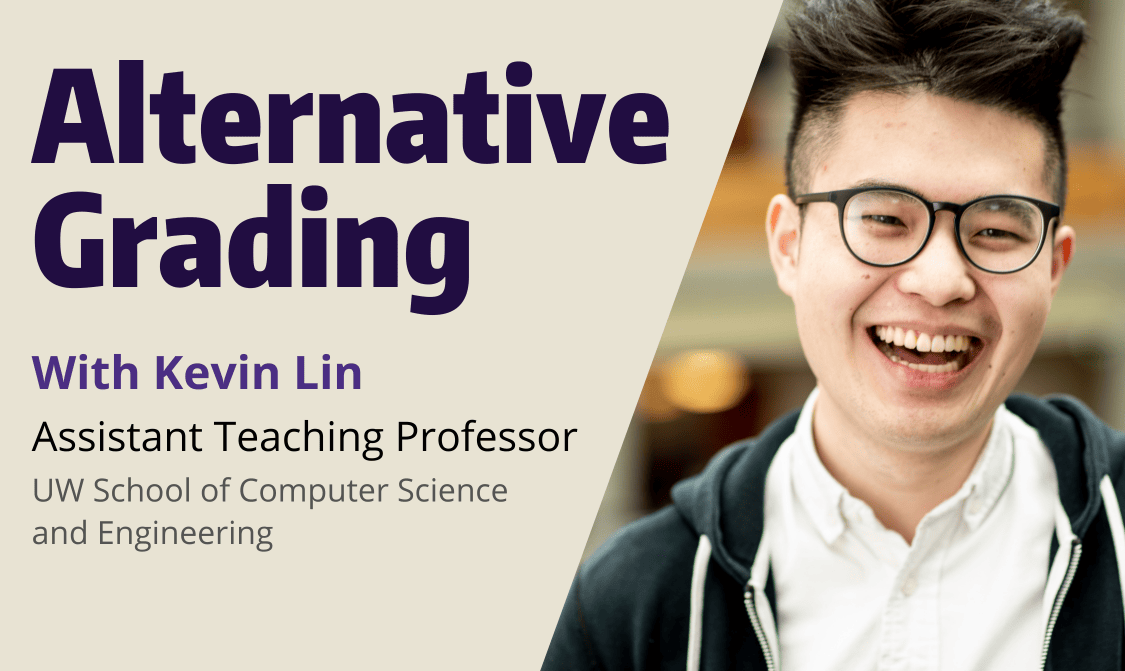
May 9 | 12-1 pm, on Zoom
Kevin Lin (Assistant Teaching Professor, UW School of Computer Science and Engineering) will discuss how instructors can use alternative grading approaches to develop more equitable, effective learning environments. Participants will learn how alternative grading methods can help meet students’ immediate needs and long-term goals.
Learn More