Lower

MEDEX Northwest Division of Physician Assistant Studies
Physician Assistant Training Program
  MEDEX Home
Who We Are Applicants Students Graduates Potential Preceptors and Lecturers Potential Employers Contact Us
Lower
     

Bachelor of Clinical Health Services Degree Curriculum
141 Credits total

Summer Quarter (1st quarter): 12 credits total

MEDEX 451, Anatomy & Physiology 6 credits
Students are taught the anatomy and physiology of the following organ systems: endocrine, immune, respiratory, cardiovascular, gastrointestinal, genitourinary, gynecological, integumentary, musculoskeletal and neurological, with a focus on clinical examples of anatomic and physiologic principles encountered in primary care practice. Course is required for all incoming MEDEX students. Offered via distance education (online) in Spring Quarter with a two-week intensive session on the Seattle campus in July.

MEDEX 450 Basic Science in Clinical Medicine 6 credits
Review of important basic science concepts that include relevant topics for a health care clinician. Prerequisite:permission of the MEDEX program

Fall Quarter: 15 credits total

MEDEX 452: Pathophysiology for Primary Care 6 credits
Course covers basic pathological and pathophysiological concepts of diseases commonly encountered in primary care practice. Pathophysiology is studied per organ system.

MEDEX 453: Basic Clinical Skills 5 credits
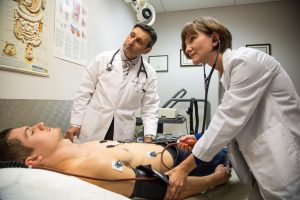
Provides the student with mastery of history and physical examination skills, thoroughness in data collection, medical record keeping and verbal presentation.

MEDEX 457: Behavioral Science Skills I 2 credits
Develops and demonstrates skills needed for assessment, diagnosis and management of common emotional problems in a clinical setting.

MEDEX 470: PA Role Course I 1 credit
Explores professional role development, health access issues, licensing issues, health care quality, interdisciplinary relationships, diverse populations and the health care environment.

MEDEX 473: Technical Skills I 1 credit
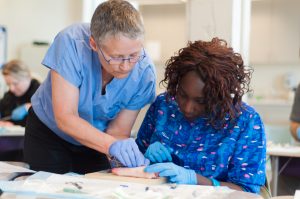
Introduces clinical skills and procedures through hands on experiences.

Winter Quarter: 19 credits total

MEDEX 454: Adult Medicine I 7 credits
Course provides a problem-oriented approach to the diagnosis and management of common primary care conditions. Organ system approach covers HEENT, rheumatology, anemia, STD/HIV and cardiovascular, gastrointestinal and hematological systems.

MEDEX 456: Maternal & Child Health I 3 credits
This course is designed to acquaint students with principles of prenatal care and primary care pediatrics. The course covers prenatal care, labor & delivery, newborn and well-child exams and a systems-oriented approach to the diagnosis and initial management of common primary care pediatric conditions. Concepts of health maintenance for children and well-child care.

MEDEX 458: Behavioral Science Skills II 2 credits
Develops and demonstrates skills needed for assessment, diagnosis and management of common emotional problems in a clinical setting.

MEDEX 460: Principles of Patient Management 3 credits
Provides systematic approach to pharmacological therapies including drug choice, risk factor identification and administration. Includes non-pharmacological therapies and emphasizes health education and health promotion strategies.

MEDEX 468: Emergency Medicine I 2 credits
Provides an approach to the diagnosis and management of common emergency conditions for primary care physician assistants. Topics include multiple trauma, chest trauma, abdominal trauma, shock and cardiac emergencies.

MEDEX 471: PA Role Course II 1 credit
Explores professional role development, health access issues, licensing issues, health care quality, interdisciplinary relationships, diverse populations and the health care environment.

MEDEX 474: Technical Skills II 1 credit
Introduces clinical skills and procedures through hands on experiences.

Spring Quarter: 19 credits total

MEDEX 455: Adult Medicine II 7 credits
Continuation of MEDEX 454. Course provides a problem-oriented approach to the diagnosis and initial management of common primary care conditions. Organ system approach covers endocrine, renal, reproductive, dermatologic, respiratory and neurological systems.

MEDEX 459: Behavioral Science Skills III 2 credits
Develops and demonstrates skills needed for assessment, diagnosis and management of common emotional problems in a clinical setting.

MEDEX 461: Principles of Patient Management II 3 credits
Provides systematic approach to pharmacological therapies including drug choice, risk factor identification and administration. Includes non-pharmacological therapies and emphasizes health education and health promotion strategies.

MEDEX 462: Maternal & Child Health II 3 credits
Continuation of MEDEX 456. The course continues a systems-oriented approach to the diagnosis and initial management of common primary care pediatric conditions. Topics covered include common respiratory, cardiac, orthopedic and dermatologic problems; adolescent medicine and also issues of abuse.

MEDEX 469: Emergency Medicine II 2 credits
Continuation of MEDEX 468. Provides an approach to the diagnosis and management of common emergency conditions for primary care physician assistants. Topics include poisonings and overdoses, environmental emergencies, thermal injuries, orthopedic emergencies, pediatric emergencies and head trauma.

MEDEX 472: PA Role Course III 1 credit
Explores professional role development, health access issues, licensing issues, health care quality, interdisciplinary relationships, diverse populations and the health care environment.

MEDEX 475: Technical Skills III 1 credit
Introduces clinical skills and procedures through hands on experiences.

Clinical Year: 76 credits total

MEDEX 463: Clinical Clerkships I 19 credits
Full-time clinical clerkship spent in institution-based or specialty practice settings with the supervision of licensed health care providers. Credit/no credit only.

MEDEX 465: Clinical Clerkships II 19 credits
Continuation of full-time clinical clerkship spent in institution-based or specialty practice settings with supervision of licensed health care providers. Credit/no credit only.

MEDEX 466 Family Practice Clerkship I 19 credits
MEDEX 467 Family Practice Clerkship II 19 credits
Preceptorship is conducted under the supervision of a family practice physician. Preceptorships are located throughout the WWAMI region. Students are trained to deal with common primary care problems and both student and preceptor are educated in the utilization and management of the physician assistant in practice. Students keep records of patient encounters and complete a variety of written assignments in addition to their clinical experience. The preceptorship is generally a two-quarter segment, although it may be extended in certain cases to permit a student to reach required performance levels. The educational objectives of this phase are: 1) to expand the knowledge and skills acquired during the didactic phase with regard to the diagnosis and management of commonly-encountered primary care problems, 2) to become familiar with office procedures and management, 3) to learn to function as an effective primary care team member and 4) to attain other objectives specified by the individual practice. Offered Credit/No Credit only.

MEDEX 499: Special Field Projects or Independent Study


Applicants
 

Program Information

BCHS Prerequisites

UW Admissions Requirements

BCHS Graduations Requirements

BCHS Curriculum

BCHS Expenses

UAA - BSHS Admissions Requirements

Information Sessions

Statistics

Technical Standards

Admissions FAQ

Admissions Timeline

Apply to MEDEX


Back to Top
Upper Upper