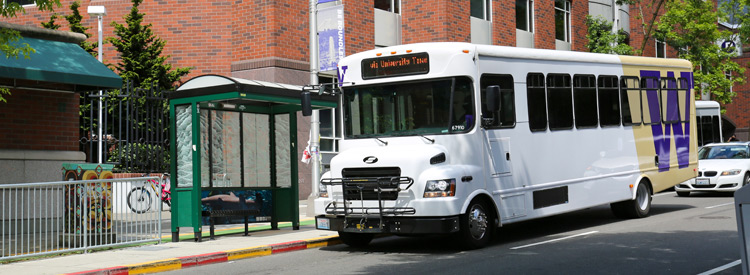
Dial-A-Ride shuttles provide transportation to most locations around the Seattle campus for UW staff, students and faculty with mobility limitations. Visitors to the University on affiliated business may also qualify. Please contact UW Shuttles for eligibility information.
Health Sciences Express provides transportation between UW Medical Center and Harborview Medical Center with stops at Roosevelt Clinic and UW Tower.
NightRide provides a fare-free, safe and easy way for U-PASS members to get home at night with stops at UW Tower, Lander Hall, the IMA, and along Stevens Way.
UWMC/Fred Hutch South Lake Union Shuttle operates a route between UWMC and South Lake Union via Fred Hutch and a separate route between South Lake Union and Harborview with a stop at Benaroya Research Institute. This service is intended for the use of employees and visitors with business at the UW, Fred Hutch and Harborview.
UW Shuttles operates Fred Hutchinson Cancer Center’s free shuttle service for patients and families between the Fred Hutchinson Cancer Center – Clinic, UW Medical Center, and the two housing facilities, Behnke Family House and Pete Gross House.
Schedules and route specific information
COVID-19 protocols
Safety: Our top priority continues to be, as it has always been, for customers to have a safe and healthy riding experience. Our COVID-19 safety protocols include:
-
High-quality facemasks are required to be worn by UW personnel on UW shuttles serving healthcare facilities. This is because these shuttles primarily serve as an extension of healthcare settings, serving patients and healthcare workers, where face coverings continue to be required. UW Medicine along with several other healthcare networks in the area continue to require face coverings.
- For all other UW shuttle services, masks are recommended for all, including drivers. Mask use on these other shuttles will align with the UW’s general face covering policy.
-
Daily COVID-19 symptom screening of employees before entering the workplace. Employees are required to stay home if they have COVID-19 symptoms or have been instructed to quarantine or isolate.
- Full daily cleaning and disinfection of high touch surfaces (hand rails and hand holds, arm rests, etc.) before and after each shift.
- Hand sanitizing supplies provided for passengers and drivers.
We encourage all our valued customers to follow these best practices:
- Get vaccinated.
- Stay home if you have COVID-19 symptoms or if you have been instructed to isolate or quarantine by a public health professional.
- Wear a face covering while inside and boarding/disembarking from the shuttle.
-
Maintain distance from other passengers when possible.
-
Wash your hands or use hand sanitizer before and after riding.