DXARTS Home

James Coupe | Selected Research Projects

(re)collectorThe Difference Engine9PIN++call_centreI, RobotDigital Warfare Network (Project Phase Two)Digital Warfare Network (Project Phase One)The Edinburgh Castle Tourist Event

(re)collector


Commissioned 2007 by The Junction and Arts Council England

Exhibited 2007, Cambridge, UK

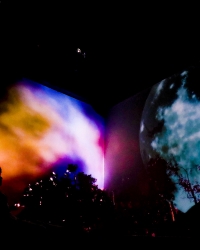
(re)collector is a public art installation that involves ten custom-built camera units positioned around a city. The camera units are configured to capture specific vistas, each of which operates as a location in an algorithmically generated film. The cameras are programmed to recognize particular human behaviors that occur within their vista, and to record moments in which such behaviors take place. At the end of each day, the footage captured by each camera is automatically analyzed and reorganized into a complete film, composed from the actions that take place in each location. The films consist of sequences of activity that together form a narrative, initially based upon master narrative templates from classic films such as Vertigo, Alphaville and Blow Up.

The films generated by the (re)collector system are then played back in the city center on a large projection screen, broadcast back into the city and starring the general public as its protagonists and antagonists. The simultaneous perspective of the city that the cameras provide permits the system to exert a directorial control over the fragmentary daily stories that touch people’s lives during their everyday activities. The insertion of the screen into the city itself allows people to watch themselves making decisions and understand how those decisions fit into a collective whole. At the same time, the (re)collector system makes decisions of its own - what to include, what to cut, what to linger upon, what to juxtapose. The work occupies public space, attempting to reveal to us aspects of ourselves that we cannot perceive without its omniscient perspective.

http://www.recollector.net

As computer science, this is perhaps the largest scale implementation ever of space-time behavior correlation, a radical and novel computer vision method for recognizing human behaviors. It has a database of cinematic ‘templates’, composed of 2 second clips from classic movies, and it seeks out matches for these across the videos that the cameras capture. Essentially, rather than simply looking for color or shape pattern matches within a single frame of video (2 dimensions), this system seeks out intensity patterns over time, thereby removing the need for the people it observes to be the same shape, size or color as the people in the cinematic templates. This is a massive computational exercise, sponsored in kind by the High Performance Computing Facility at Cambridge University, who provided access to their supercomputer, currently rated the 20th fastest computer in the world.

next


Selected Research Projects | Artist's Biography | Curriculum Vitae | Contact Info | DXARTS Home