Access to Science
Some students with disabilities have conditions that are invisible; some are visible. Since each person's situation is unique, the best solutions for maximizing participation come about when the student, teacher, parent, and support staff (e.g., special education teacher, Individualized Education Plan team members) work together to develop creative alternatives for challenges faced by students with disabilities. Such challenges include gaining knowledge and demonstrating knowledge. In most cases, it takes just a little creativity, patience, and common sense to make it possible for everyone to learn and contribute. Review the videos and handouts Working Together: Science Teachers and Students with Disabilities and Equal Access: Science and Students with Sensory Impairments for additional insights into access challenges and solutions for students who have visual or hearing impairments.
Gaining Knowledge
Many students with disabilities face challenges to gaining knowledge. Examples of specific challenges and accommodations follow:
- A student who has difficulty reading standard text or graphics because of a visual impairment can be accommodated with materials in large print or Braille, audio, or via computer; enlarged or tactile drawings; and access to adaptive technology that provides enlarged, speech, or Braille output.
- A student with a visual impairment who cannot see content written on the blackboard or video projector may benefit from using binoculars. Verbalization of the content and oral descriptions of all visually displayed materials is also helpful.
- A student who cannot read output from standard equipment because of a visual impairment may benefit when the teacher interfaces lab equipment with a computer and provides large print or speech output.
- Scientific equipment with Braille or large-print markings will help maximize the participation of a student who is blind or has low vision, respectively.
- A student who is hard of hearing may use an FM system or an interpreter. Providing materials in printed format, facing a student for lip reading, and using an overhead projector or blackboard can also be appropriate accommodations.
- For a student who cannot hear video or multimedia, make sure that presentations with an audio component are captioned or an interpreter is provided.
- A student who has difficulty participating in class discussions because of hearing or speech impairments may benefit from using email. A portable computer with speech output can give a person without the ability to speak a tool for communication.
- A student with a learning disability who has difficulty understanding concepts may benefit when visual, aural, and tactile demonstrations are incorporated into instruction.
- A student who has difficulty reading because of a specific learning disability may need extra time and access to materials via a computer equipped with speech or large print output. School support staff may arrange for this student to get audiobooks.
- When a student cannot take notes in class because of a mobility or visual impairment, provide in-class access to a computer with adaptive technology.
- A student who cannot operate standard lab equipment and conduct lab experiments because of a mobility impairment should be provided with an accessible facility. Also consider providing a lab partner or scribe, computer-controlled lab equipment with alternative input devices (e.g., speech, Morse code, alternative keyboard), and modified scientific equipment.
- For a student who cannot see demonstrations or view lab experiments while seated in a wheelchair, provide an adjustable table.
- If a student cannot complete an assignment or a lab because of a health impairment, arrange a flexible lab schedule.
Demonstrating Knowledge
Some students with disabilities cannot demonstrate mastery of a subject by writing, speaking, or working through a problem in a lab. Many of the accommodations for gaining knowledge can also help the student demonstrate mastery of a subject. Examples of other accommodations follow:
- The student who has difficulty completing and submitting worksheets and tests because of a visual impairment or a specific learning disability can be accommodated with worksheets and tests in large print or Braille, in an audio format, or via computer with access to adaptive technology that provides enlarged, speech, or Braille as well as standard print output.
- A student who cannot complete a test or assignment because of a disability that affects the speed at which the task can be completed may require extra time or alternative testing arrangements.
- A student who cannot complete a test or assignment because of the inability to write may benefit from in-class access to a computer with alternative input devices (e.g., Morse code, speech, alternative keyboard).
In the Classroom: A Math Teacher's Experience
I am a high school mathematics teacher. Each fall I look forward to meeting new students. It is exciting for me to watch young people solve problems and gain new skills in the classroom. Over the past ten years, however, I have noticed that many students do not have access to successful experiences that lead to excellence in math. These students have special needs that are often overlooked in the regular classroom. They may have physical, learning, visual, hearing, or other types of disabilities that affect their ability to learn without some type of accommodation in the classroom.
Meeting individual needs effectively while serving all of the 150–180 students with whom I come in contact each day is difficult. However, I have found that some strategies increase the performance of all students in mathematics while addressing the unique needs of those with disabilities. Some of these strategies are particularly effective for students with ADHD or specific learning disabilities. Here are a few of my most commonly used tricks of the trade:
- Don't make assumptions about what students can or cannot do. They almost invariably have more capabilities than the teacher asks for.
- Talk to students in private about learning styles and classroom arrangements that have worked for them in the past.
- Dim the lights when working on an overhead projector to help students direct their attention and focus on what's most important.
- Seat a student with ADHD near the teacher's desk and away from windows where outside activities may cause a distraction.
- Modify the layout of the room or move the desk of a student distracted by white noise, such as air conditioners, fans, buzzing lights, and other environmental factors.
- Encourage peer tutoring and cooperative learning situations.
- Encourage on-task behavior.
- Have pre-established consequences for behavior, and stick to your rules.
- Avoid ridicule and criticism.
- Ask the family to make arrangements at home to accommodate their child. For example, they could provide a regular study area that is free of distractions.
- Being called on in class can be very disorienting and embarrassing for some students with specific learning disabilities. Let them know ahead of time that you are going to be asking them a question in front of the group, which allows them to collect their thoughts.
- Provide students with copies of your lecture notes and outlines. They can add to the notes with their comments. This helps all students to follow the lecture and is especially helpful for students who have difficulty writing.
- Be an actor and use props in class to get a point across.
- Keep oral instructions logical and to the point. The teacher must keep on task too!
- Repeat instructions and ask the class to repeat the instructions to you.
- Provide definitions for unfamiliar mathematical terms.
- Have students underline and later discuss words they do not understand fully.
- Give assignments in written and oral forms.
- Give several days (with time for questions or feedback) for complex out-of-class assignments.
Accommodating individual needs in the mathematics classroom sets a tone for the year that honors individual effort and values everyone. Students who respect each others' contributions in the classroom not only learn more mathematics but also learn valuable lessons about what makes them better people.
In the Classroom: A Science Teacher's Experiences
I am a high school science teacher who works at a school for students with visual impairments. Drawing on my wide range of experience, I make the following recommendations to teachers who have a student who is blind in their science classes:
- The first question to ask yourself is,"How do I provide this student with a quality educational program?" Although he will need some accommodations, your good teaching skills, with some modifications, will serve this student well.
- Your school district may have an itinerant teacher who works specifically with students who have visual impairments. These professionals may provide additional resources, three-dimensional models, or Brailled materials.
- Regarding room logistics, ask the student where the best place is for him to sit. He will provide you with his insights on seating arrangements and other strategies that have worked in the past. Remember, he is, or should be becoming, an expert on his disability and accommodation needs.
- Modifications in the classroom should include tactile drawings or graphs, three-dimensional models, and a lot of hands-on learning. An example of an inexpensive solution is to buy fabric paint or get a glue gun to make raised drawings. Keep these drawings simple and free of clutter, or they will confuse rather than help. Try them yourself.
- A student who is blind may require Brailled text. Work with the special services in your district to make arrangements to have materials Brailled. Pre-recorded audio content can also be used to give information to a blind student.
- If you show movies or videos, verbally describe the action. Some videos are available with an audio description option for visually impaired viewers.
- Always be sure that a student who is blind is included in all class discussions and hands-on experiences. Participation will give the student confidence and opportunities to work closely with his sighted classmates.
Below are some specific examples of how you might accommodate students who are blind in a science classroom:
- Make a syringe tactile by cutting notches in the plunger at 5-mL increments.
- Make a triple beam balance tactile by filing deep notches for each gram increment. Add glue drops on either side of the balance line so that the student will know when the weights are balanced.
- Make graphs tactile by using glue guns or fabric paint.
- Add Braille labels to lab equipment.
- Identify increments of temperature on a stove with fabric paint.
- Use different textures like sandpaper or yarn to identify drawers, cabinets, and equipment areas.
- Make models out of clay, plaster of paris, or papier-mâché.
- For geometric shapes, use 3-D triangles or spheres.
- For maximum hands-on experiences, use a pegboard with golf tees and rubber bands to draw shapes or develop spatial awareness.
- Use styrofoam and toothpicks or molecular kits to show atoms and molecules.
- For a measurement tool, use staples on a meter stick to label centimeters.
- When measuring liquids, have glassware with specific measurements, or make a tactile graduated cylinder. Use a cork borer to make a styrofoam circle. On a plastic strip gardeners use to identify plants, cut out notches at 5-mL increments. Put a notch in the styrofoam circle, and glue the plastic strip in. When water is put in the cylinder, the styrofoam will float upwards and your student can use touch to measure the liquid.
Inexpensive supplies used creatively with a commitment to the full participation of all students can create a positive classroom experience for students who are blind.
Listen to the Experts
DO-IT student participants have taught us to look at the unique abilities of every student. In the course of developing this notebook, we asked them to share with science and math teachers ideas for working with students like themselves. Here are a few suggestions from the real experts:
- My name is Nhi. I attended high school in Washington. I am visually impaired and have limited vision in seeing details. One thing I would suggest is that the teacher describe in detail what is happening in a science lab. For instance, in a physics lab, have the student feel with their hand (if it is possible). An example would be, when we do an experiment on using the pulley and putting weight on it to make a cart on a table accelerate, it would be nice if the student like me can feel the process and have it described in detail to them. Or in biology, when it comes to dissecting a frog, have a student who is blind do the dissecting with guidance from a visual student on what and where to dissect.
- My name is Sue, and I am from New York. I have mild cerebral palsy, ataxia, and neurological impairments with perceptual problems and my motor coordination is very limited. When I took biology, my lab partners did the dissection while I wrote up the labs. To make it more accessible, we swapped duties. In college science classes, I had additional physical assistance with manual projects and extra time on tests and assignments.
- My name is Josh. I attend high school in Iowa and have spinal muscular atrophy. I am unable to walk and have limited use of my arms. One thing that is helpful in a lab is if work areas are at the right height for wheelchair users and tools are within reach.
- My name is Bridget. I attended high school in Washington and I'm currently a college student. I'm profoundly hearing impaired and my main problem is understanding speakers. When presenting a topic or giving instructions for an activity, visual aids, especially written comments or instructions, are very helpful. I also use a microphone system to hear the speaker, called an FM system. Be aware that students with hearing impairments may not hear random and quick comments you may make during an activity. Speakers need to have the attention of everybody, including the student with a hearing impairment, before saying anything important.
- My name is Trent. I attend high school in Washington. I have seizures and coordination difficulties. Because of these disabilities I miss important parts of lectures at times and am unable to write or type fast enough to take notes. Doing math is difficult because there is not enough space on most tests for my large handwriting. The accommodations that have worked for me are getting extra time to take tests, providing enlarged test paper to write answers on, and allowing me to record lectures to listen to at home. It is also helpful for me to have a lab partner to assist in making precise measurements and writing the experiment results.
- My name is Frank. I have been blind since I was sixteen. I attended high school in Montana. I am currently an electrical engineer for Battelle Laboratories. Math and science can be difficult subjects for a student who is blind—not only because of the visual nature of graphs and much of the lab work but also because of the rushed nature of most classroom labs. Be sensitive to the need for preparation time required by the student before the class commences to get textbooks in audio or Braille format. The many adaptive technologies now available to help deal with the barriers imposed by blindness are wonderful, but nothing can replace the support of a teacher who is aware, positive, and proactive. Working with a student who is blind is neither a burden nor a blessing, just another challenge. Your attitude and the choices you make can be pivotal. Most important, remember that you need to work closely with the student as a partner in this process, letting them participate in the development of the approaches and accommodations that you will incorporate into your lessons. Every person who is blind is an individual and is usually the most knowledgeable resource on what specific adaptations work best for them.
Academic accommodations can make learning opportunities accessible to all students. The best accommodations result when teachers, students, and support staff work together in creative, collaborative ways. Examples of commonly used accommodations are listed below.
Low Vision
- Seating near front of class
- Large-print handouts, lab signs, and equipment labels
- TV monitor connected to microscope to enlarge images
- Class assignments made available in electronic format
- Computer equipped to enlarge screen characters and images
Blindness
- Audio, Braille, or electronic lecture notes, handouts, and texts
- Verbal descriptions of visual aids
- Raised-line drawings and tactile representation of graphic images
- Braille lab signs and equipment labels
- Auditory lab warning signals
- Adaptive lab equipment (e.g., talking thermometers and calculators, light probes, tactile timers)
- Computer with optical character reader, voice output, Braille screen display and printer output
Hearing Impairments
- Interpreter or real-time captioning
- FM system
- Note taker
- Open- or closed-captioned videos
- Visual aids
- Written assignments, lab instructions, demonstration summaries
- Use of email for class and private discussions
- Visual warning system for lab emergencies
Learning Disabilities
- Note takers or audio recorded class sessions
- Captioned videos
- Extra exam time, alternative testing arrangements
- Visual, aural, and tactile instructional demonstrations
- Computer with voice output, spelling checker, grammar checker
Mental Illness
- Note taker, copy of another student's notes, or recording of lectures
- Extended time on assignments and tests
Mobility Impairments
- Note taker/lab assistant
- Group lab assignments
- Classrooms, labs, and field trips in
- accessible locations
- Adjustable tables; lab equipment located within reach
- Class assignments made available in electronic format
- Computer equipped with special input device (e.g., voice input, Morse code, alternative keyboard)
Health Impairments
- Note taker
- Flexible attendance requirements and extra exam time
- Assignments made available in electronic format; use of email to facilitate communication; web-based
- materials and assignments
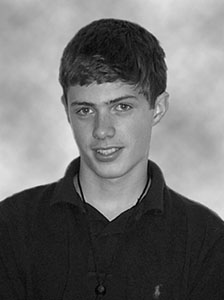
Carson Completes NASA Internship: A Success Story
The following excerpts are from email messages sent by Carson, a University of Washington student with a learning disability who worked at the National Aeronautics and Space Administration (NASA) as an intern; this opportunity was coordinated through DO-IT's AccessSTEM project.
June 7, 2005: "Some people have asked me about where I applied to get the NASA internship. It is through a program called ENTRYPOINT! at the American Association for the Advancement of Science (AAAS). I would strongly encourage you to apply if you are a college student and have an interest in a career in science or engineering."
June 19, 2005: "It has been one week since I flew into New Orleans to start an eight-week internship at the Stennis Space Center in Mississippi. I'm living in New Orleans with three other guys, one of whom is also an intern. I'm working with Boeing engineers and technicians who have been contracted by NASA to test rocket engines. This past week I have been meeting people and getting a feel for how everything fits together. One specific thing I did this week was to enter ultrasonic bolt measurements into a database. They keep track of every minute detail to the nth degree because even a small error can spell disaster. Last night we went to Bourbon Street in downtown New Orleans—it was quite a site to see."
June 23, 2005: "There are three different 'test stands,' which are very large concrete structures that cradle the engines during testing. There are several teams that facilitate the testing process. The one I am assigned to is called 'ground support and maintenance.' Their activities include making parts for maintenance purposes. We also do load testing to make sure the equipment can properly hold the engine. The test results came in yesterday and it was found there were several blowouts in the coolant tubing which lines the nozzle. Today I went over to check out the damage."
July 3, 2005: "This week I worked on two different projects, one in the office and the other on the engine test stand. The office job involved tracking down and making a list of lapping tools. They are used to smooth down joints on the engine tubing. The engine we work on is called the Space Shuttle Main Engine (SSME). I have been trying to understand how it works. Looking at its blue-print is kind of mind boggling. The other job I'm working on is on the test complex. What I am doing there is helping a mechanic take down a bunch of old tubing and components used on a project that is no longer in service. This internship is a unique chance for me to mix with really different people."
July 27, 2005: "It was determined that a piece of foam that came off the shuttle's main fuel tank about two minutes into flight was very serious. Had it come off earlier, they said, it could have caused fatal damage to the spacecraft. This is a major setback to NASA because they have been working very hard on this issue. Hopefully this problem can be fixed soon. The current mission is not in jeopardy as far as anyone knows, but we did have a close call."
Space Shuttle Discovery returned safely to earth shortly after Carson returned home, two weeks before Hurricane Katrina.