Information Access
K-12 and postsecondary institutions are in the business of sharing information, and we do it in many ways, including through spoken word, print publications, videos, and online content. In our educational programs, we share information through classroom work, labs, homework assignments, library resources, and web pages.
Some methods used to impart information are not accessible to some students, including those with visual impairments, hearing impairments, mobility impairments, speech impairments, learning disabilities, and health impairments. Those whose first language is not English or who have alternative learning styles also face difficulties in accessing some types of information.
Besides being the right thing to do, for people with disabilities it is our legal obligation to provide access to all of the programs and services we offer. Section 504 of the Rehabilitation Act of 1973 requires that "no otherwise qualified individual with a disability shall, solely by reason of his/her disability, be excluded from the participation in, be denied the benefits of, or be subjected to discrimination under any program or activity of a public entity." The Americans with Disability Act of 1990 reinforces and extends this mandate. Educational institutions are covered entities under this legislation.
Access Challenges
Some of the specific ways we impart information in our schools and the challenges these modes impose are discussed below.
Spoken Word
Much information in our classes is presented via the spoken word. Below are examples of disabilities that might result in students having difficulty accessing information through the spoken word and examples of how we can ensure access.
- Hearing impairments (e.g., sign language interpretation, real-time captioning, lipreading, printed information)
- Speech impairments (e.g., computer-based communication devices, printed input that allows students with speech impairments to ask questions and participate in discussions, conducting discussions electronically)
- Health impairments (e.g., conducting discussions electronically)
- Learning disabilities, English as a second language, and visual learning (e.g., printed information, clear and well-organized information, visual cues, audiobooks, electronic text)
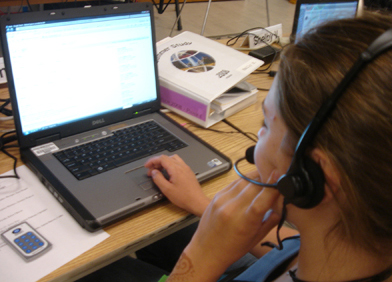
Teachers also impart information to students via print media. Following are examples of disabilities that might result in students having difficulty accessing information through print and examples of alternatives that ensure access.
- Low vision (e.g., using a copier to enlarge materials, reformatting electronic documents in large print, sending material in an electronic format)
- Blindness (e.g., providing information in electronic form so that students can use a computer system with speech output or Braille output or so that disabled student services can arrange to create the materials in Braille or audio formats)
- Mobility impairments (e.g., having materials in electronic form if students are unable to manipulate printed materials)
- Health impairments (e.g., having materials in electronic form so students can access it remotely)
- Learning disabilities, English as a second language, auditory and visual learning (e.g., creating printed information that is clear and well-organized and that includes visuals such as overheads, graphics, and diagrams)
Video Content
People with learning disabilities, for whom English is a second language, or who are deaf or hard of hearing might have difficulty accessing video or televised information. These individuals all benefit when captioning or transcription of the content is provided. Students who are blind require audio descriptions of visual content.
Audio Information
For audio information, a written transcript can be helpful for students with hearing impairments, with learning disabilities, or for whom English is a second language.
Computer-Based Information
Another common mode for delivering information is electronically. There are two levels where access barriers can occur in this case.
The first challenge is gaining access to the computer itself. The second is gaining access to the information delivered via computer. Let's discuss the first challenge. To explore this topic, view the video Computer Access: In Our Own Words, in which individuals discuss the various ways that they access computers, some using adaptive (or assistive) technology. Note that this video is captioned, which makes it more accessible to individuals who have hearing impairments, for whom English is a second language, and who have learning disabilities. An audio-described version of the video is also available in which you will notice additional narration that describes the visual materials for a viewer who is blind.
The assistive technology demonstrated in the video provides access to the computer itself. However, software and websites must be designed in such a way that they can be accessed by individuals who use this technology.
Providing information on web pages in accessible format is the right thing to do. The ADA also requires that we make the content of information accessible to individuals with disabilities. A Department of Justice ruling in 1996 clarified that the ADA also applies to information delivered over the Internet. Developing web pages in an accessible format can also help us avoid expensive redesign at a later time if an individual with a disability needs access to the content.
View the video and read the handout World Wide Access: Accessible Web Design, to learn how websites can be designed in such a way that they are accessible to everyone, including people with disabilities and people for whom English is a second language. The content of the video and publication focuses on how we can impart information in a way that makes it accessible to everyone.
A good way to conceptualize this topic is to think about it as an application of the principles of universal design. Universal design means "the design of products and environments to be usable by all people, without the need for adaptation or specialized design" (Center for Universal Design, 1997). For every format used to present information, thinking about the variety of characteristics of individuals with whom we want to share this information is the first step toward ensuring that everyone can access the content.

Tip: Information Access
In the Presentations section of this notebook, you will find guidelines and materials for delivering a presentation on information access.