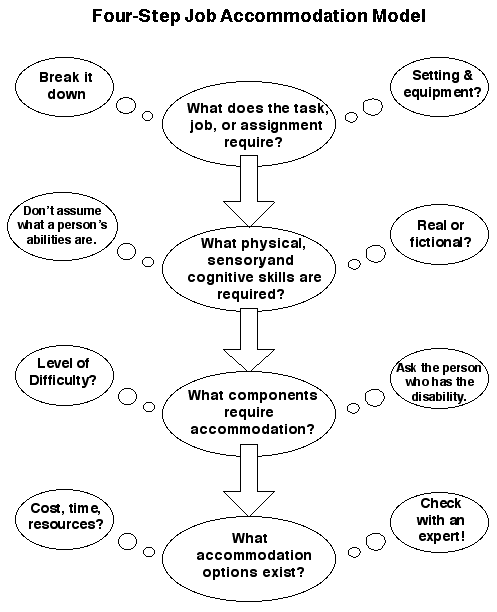
Four-Step Accommodation Model
- Show Overhead #25
The process of determining appropriate job accommodations is an important aspect of a work-based learning experience. Employers and career development professionals should always work with the student to decide which accommodations will work best for him. Only he knows the full implications of the disability and what will work best in a specific situation. Below is an easy-to-follow four-step process for determining appropriate job accommodations.
Step #1: What does the task or assignment require?
This step asks you to break down ALL of the components of the job. Many times, as an employer you are so close to the project that it is difficult to remember the various settings, tools, skills, and tasks that are required in an individual project. By analyzing and evaluating the task thoroughly, you will be able to determine how best to fully and effectively include a student with a disability.
Step #2: What physical, sensory, and cognitive skills are needed?
This step requires you to compare the tasks required to the physical, sensory, and cognitive skills needed to successfully complete the job. It is easy to say, "If I had a physical, sensory, or cognitive disability I would not be able to successfully complete this job," without really determining what skills are needed. Separate the "real" requirements of the task from the "fictional or perceived" aspects of the project. It is impossible to place yourself in the shoes of the employee with a disability. The future employee may have learned many ways to solve a unique problem or task and work around the limitations his disability may pose.
Step #3: What components of the task require accommodation?
Once the task has been analyzed and the skills needed are identified, step 3 asks you to determine what accommodations may be needed. Here you determine the level of difficulty of the project and determine how best to make an accommodation to create an inclusive environment for an employee with a disability. It is very important to first check with the prospective employee to determine what she perceives as aspects of the job in which she may need an accommodation or assistance.
Step #4: What accommodation options exist?
Now that the tasks that need accommodation have been determined, identify what resources exist for providing the necessary accommodation. This is a time when other staff or employees who have expertise in a specific area can be called on to provide input. Remember, however, that the employee with a disability should always be your first resource. The cost and time required for the accommodation are variables that may also be weighed in determining an effective accommodation. Use the most readily available resources in making accommodations. Campus Disabled Student Services (DSS), the Job Accommodation Network (JAN), and other community resources, such as the Division of Vocational Rehabilitation (DVR) may also be able to assist you. Consult the Resources section of this notebook for information on how to contact these organizations.
Following is a graphic representation of the Four-step Accommodation Model.